Trusted Resources for Help
Together Let's Break the Silence

Trusted Resources for Help
If you or someone you know needs support, these organizations provide confidential guidance and assistance:

Trusted Resources for Help
If you or someone you know needs support, these organizations provide confidential guidance and assistance:
Child Abuse Awareness: Recognizing the Signs & Taking Action
Every child deserves to feel safe, protected, and heard. Child abuse often goes unseen—but the signs are there if we know what to look for.
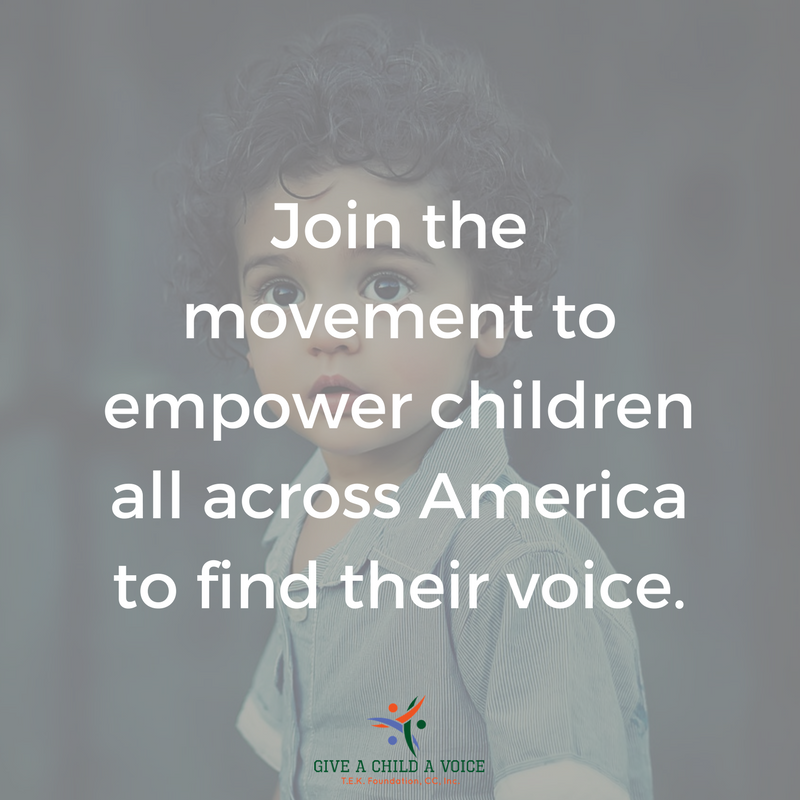
At Give a Child a Voice, we are committed to raising awareness, educating communities, and helping children break the silence.

Signs of Child Abuse
-
Regression in behavior
-
Fear of certain individuals
-
Sudden changes in behavior or mood
-
Withdrawal or anxiety
-
Unexplained injuries
-
Regression in behavior
-
Fear of certain individuals
Understanding Child Abuse and Its Forms

Physical
Intentional physical harm that results in injury or pain.

Emotional Abuse
Ongoing behaviors that damage a child’s self-worth or emotional well-being.

Sexual Abuse
Any sexual activity involving a child, including exploitation or exposure.

Neglect
Failure to meet a child’s basic needs for safety, supervision, food, shelter, or medical care.
Abuse can happen once—or over time. Both are serious.



Signs a Child May Be Experiencing Abuse
Awareness begins with noticing changes and patterns.
Behavioral Signs
-
Withdrawal from friends or activities
-
Sudden mood or behavior changes
-
Fear of certain people or places
-
Regression to younger behaviors
-
Difficulty sleeping
Physical or Situational Signs
-
Unexplained injuries or repeated “accidents”
-
Poor hygiene or consistently unmet needs
-
Frequent absences from school
-
Inappropriate clothing for weather or conditions
-
Lack of supervision or unsafe environments

Give a Child a Voice exists to ensure no child suffers in silence. Through awareness, advocacy, and empowerment, we are building a movement that helps children find their voice and access the support they deserve.
If a child is in immediate danger: Call 911
If you suspect abuse or neglect: Contact your local Child Protective Services (CPS)
If you’re unsure: Speak with a mandated reporter such as a teacher, counselor, doctor, nurse, or social worker
You don’t need proof to take action. Concern is enough.
Reporting is about Protection - not punishment
Frequently Asked Questions About Child Abuse
Q1:
What are the most common signs of child abuse?
👉 Sudden behavior changes, fearfulness, unexplained injuries, and withdrawal can all be warning signs.
Q2:
What should I do if I suspect child abuse?
👉 Stay calm, document concerns, and report to appropriate authorities or professionals.
Q3:
Can emotional abuse be as harmful as physical abuse?
👉 Yes. Emotional abuse can have long-term psychological effects and impact a child’s development.

At Give a Child a Voice, we raise awareness, educate our communities,
amd help families find trusted support
Where Silence Ends, a Child's Voice Begins
If something feels wrong, trust your instincts—your awareness could change a child’s life.